The Audiophile Laws: The Must-Have Audiophile Book
The Audiophile Laws is a book about the best methods to assess the performance of a high-end audio system, diagnose performance problems, and make straightforward decisions in advancing its performance. It teaches the audiophile how to efficiently assess the sound quality and choose equipment that will elevate the listening experience.
The book is based not on common practices or the received wisdom of the audiophile community but upon comparisons of actual audio systems. It is a collection of principles as an outcome of building and improving audio systems. The Audiophile Laws have been demonstrated to work repeatedly and are reliable.
Book Applications
Applying these audiophile laws consistently will elevate the performance of your HiFi and bring greater satisfaction in listening. It will also save you a great deal of money by avoiding mediocre improvements and unnecessary purchases. Any audio system, from a starter system under $1,000 to a state-of-the-art one, can be improved, and The Audiophile Laws will teach you the secrets to achieving your dream system.
The Audiophile Laws consulting services apply the principles contained in The Audiophile Laws to your unique situation. It is the most efficient way for you to benefit from proven methods to elevate your system’s performance and enhance enjoyment in listening.
Discover The Audiophile Laws
The Table of Contents of The Audiophile Laws shows that they are extensive. You will discover practical ways to advance your audio system:
- Preface
- The Ground Rules (Introduction)
- The Foundational Audiophile Law
- The Law of Efficacy and Assessment of Audio Systems
- Habitus of the Audiophile
- Budget and Thriftiness
- Tweaks
- Industry Members and Hobbyists
- The Listening Room
- Break In and Warmup
- Tubes Versus Solid State; Tube and Op-Amp Rolling
- Sources
- Preamplifiers and Amplifiers
- Cables
- Speaker Connections
- Speaker Systems
- Component Topology and System Configuration
- Conclusion

Excerpts from the book
Assessing the Capabilities of Your Audio System
Play many genres of music to assess the capabilities of an audio system. Play complex music, not-so-pretty music, and older and poorly recorded music from many musical genres to see how well the system handles them. Have a wide variety of musical selections available for demo purposes. I have hundreds of vocal and instrumental pieces that I use for assessment. I typically bring titles of hundreds of demo tracks to audio shows.
A superior audio system makes all genres of music sound superb in terms of performance, including music that has been dynamically compressed. If it does not, then it is not that good of an audio system. Demonstrations of equipment with music complementary to the capacity of the system typically do not reveal weaknesses of the system.
When optimizing your own system, play many genres of music, even if you do not prefer them. When the system is optimized in that fashion, your preferred genre(s) of music should be eminently gratifying. As an example, my brief AXPONA 2026 playlist is in the “Appendix” of The Audiophile Laws.
Synergy in Audio Systems
You may hear an industry member say that a product does not have good synergy in a particular system, but you likely will not hear a manufacturer or dealer say the product is not that good. If you hear a system that does not sound good and purportedly does not have good synergy, you have no assurance that any of the products in the system will be exceptional.
Received Wisdom Versus Hands-On Experience
Often, the advice given by manufacturers, dealers, and reviewers is received wisdom that may not have been tried and tested. Industry members regularly share such received wisdom as though it is a demonstrated procedure. They may have no experience with it, but have an opinion about it. Do not presume that industry members are using the best methods in establishing audio systems.
I recall reading a reviewer admitting that he did not believe in the efficacy of bi-wired speakers but used the method because he thought it looked better. Additionally, I have encountered another reviewer who advised that subwoofers were not necessary, though he had never used one. When he did, he changed his opinion. Manufacturers and reviewers often have strong opinions about recommended cables, though some have never compared entire sets of cables. Industry members often presume answers to questions about performance versus building audio systems to reach conclusions.
Failure to recognize the influence of the cable set may result in the audiophile changing multiple components in a bid to improve the system sound. Cables have such a pervasive influence on the sound that deficiencies in performance may not be eliminated by changing components. Ignoring cables while swapping components or speakers is an expensive pathway to underperformance.
Choosing the Most Appealing Speaker
If a particular speaker technology does not sound good to you, do not buy it even if a manufacturer, dealer, reviewer, or audiophile insists it is better. If it does not sound good because it seems too resolving or detailed, that can be adjusted through the selection of components and cable set.
A speaker worthy of consideration should sound compelling every time you hear it. If you like the other characteristics of the speaker but feel it is too strident, ask the dealer to adjust the audio system to reduce the stridency if the system allows it. However, you should not expect personal preferential treatment at shows. Some manufacturers at shows will accommodate an after-hours listening session to potential buyers, and adjustments might be possible in this more private environment.
Novel Orientation of Speakers
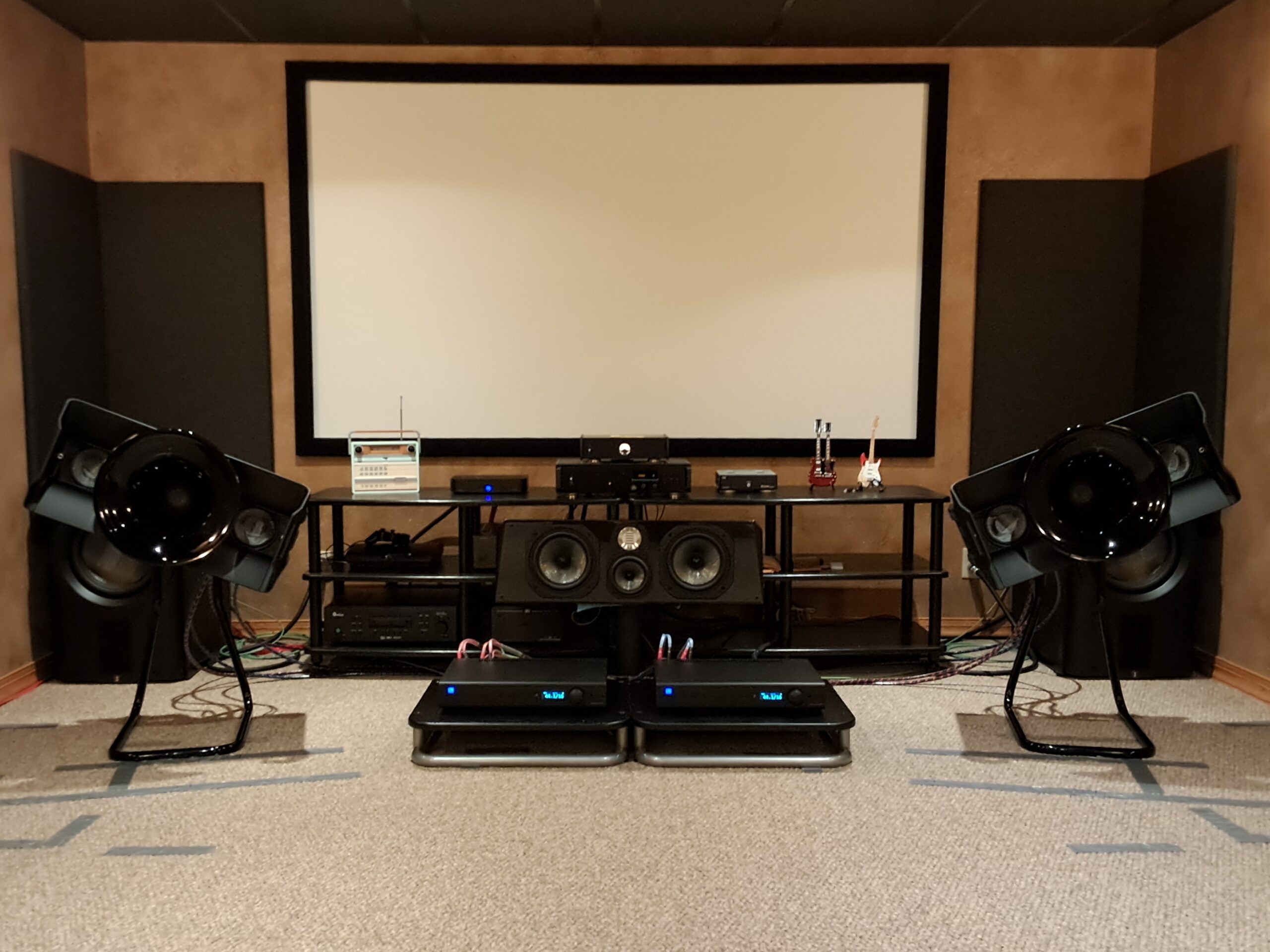
The Flying V Orientation of Speakers (shown in the image to the left) is a highly efficacious alternative positioning that splits the difference between the traditional Portrait Orientation and Landscape Orientation. It yields a tight, dense center imaging like a concentric or full-range speaker system, and a broad or widened soundstage toward the sides like a dipole speaker system.